
 Jago contemplates the water with the confidence of someone who’s never actually thought anything through
Can French Bulldogs Swim?
The short answer: Technically yes. In the same way that I can technically play the violin. (I can’t. It sounds like cats being murdered. You get the idea.)
The real answer: French Bulldogs are built like furry bricks with legs. They can paddle frantically for a bit, but “swimming” implies grace, efficiency, and some reasonable expectation of not immediately sinking. Frenchies have none of these qualities.
If you dropped a Labrador and a French Bulldog into a pool (please don’t), the Labrador would swim laps whilst composing poetry. The Frenchie would sink like a very indignant, snorting anchor.
Let me explain why.
Why French Bulldogs Can’t Really Swim (A Tragedy in Anatomy)
Frenchies are marvellous in many ways. Athleticism is not one of them.
1. They’re Top-Heavy (Like a Poorly Packed Suitcase)
French Bulldogs have:
- Large, heavy heads (full of important thoughts like “is that food?” and “why is there weather?”)
- Broad, muscular chests (barrel-shaped and proud)
- Short, stubby legs (adorable, but hydrodynamically useless)
- Compact rear ends (no natural buoyancy whatsoever)
In water, this means their bum sinks immediately, their head struggles to stay above the surface, and their little legs paddle furiously whilst achieving approximately nothing.
It’s like watching someone try to swim whilst wearing a rucksack full of bricks. Except the someone is very determined and has no idea they’re terrible at this.
2. Brachycephalic Breathing Struggles (The Panting Problem)
That adorable flat face that makes Frenchies look like tiny, grumpy old men? It’s also why they can’t breathe efficiently.
Swimming requires:
- Keeping your head above water
- Breathing steadily whilst exerting effort
- Not panicking when water splashes your face
Frenchies struggle with all of this. Their shortened airways mean:
- They pant to cool down, but can’t pant effectively whilst swimming
- Water in the face triggers panic (understandably—they’re already working hard to breathe)
- They tire quickly because breathing is effort even on dry land
Add physical exertion and water, and you’ve got a recipe for rapid exhaustion and potential distress.
3. Low Stamina (They’re Built for Naps, Not Laps)
Even if a Frenchie could swim efficiently (they can’t), they wouldn’t last long. These dogs were bred for companionship and looking adorable on chaise longues, not endurance sports.
A Frenchie’s idea of vigorous exercise is:
- Walk to the kitchen
- Investigate if snacks have spontaneously appeared (they haven’t)
- Return to sofa
- Nap for three hours to recover
Swimming is exhausting for them. Even with a life jacket, most Frenchies will paddle enthusiastically for 30 seconds before looking at you like “Right, I’ve done swimming now, can we stop?”
Critical Safety Warning: Never leave a French Bulldog unattended near water. Ever. Not a pool, not a pond, not the sea, not even that bucket you’re using to wash the car.
Frenchies can and do drown in shallow water. They can’t self-rescue. This isn’t dramatic. It’s biological fact.
There was an incident involving Jago and a neighbour’s pond that I genuinely don’t like thinking about. He decided, with his usual lack of forethought, to investigate some ducks. Got too close to the edge. Went in. Immediately sank like a small, panicked brick.
I aged seven years in four seconds. Fished him out (not difficult, he was literally just below the surface, thrashing), and he stood there dripping and looking confused about why water had betrayed him so thoroughly. The ducks were unimpressed. The neighbour was very gracious about the whole thing. I still have mild heart palpitations when we walk past that pond.
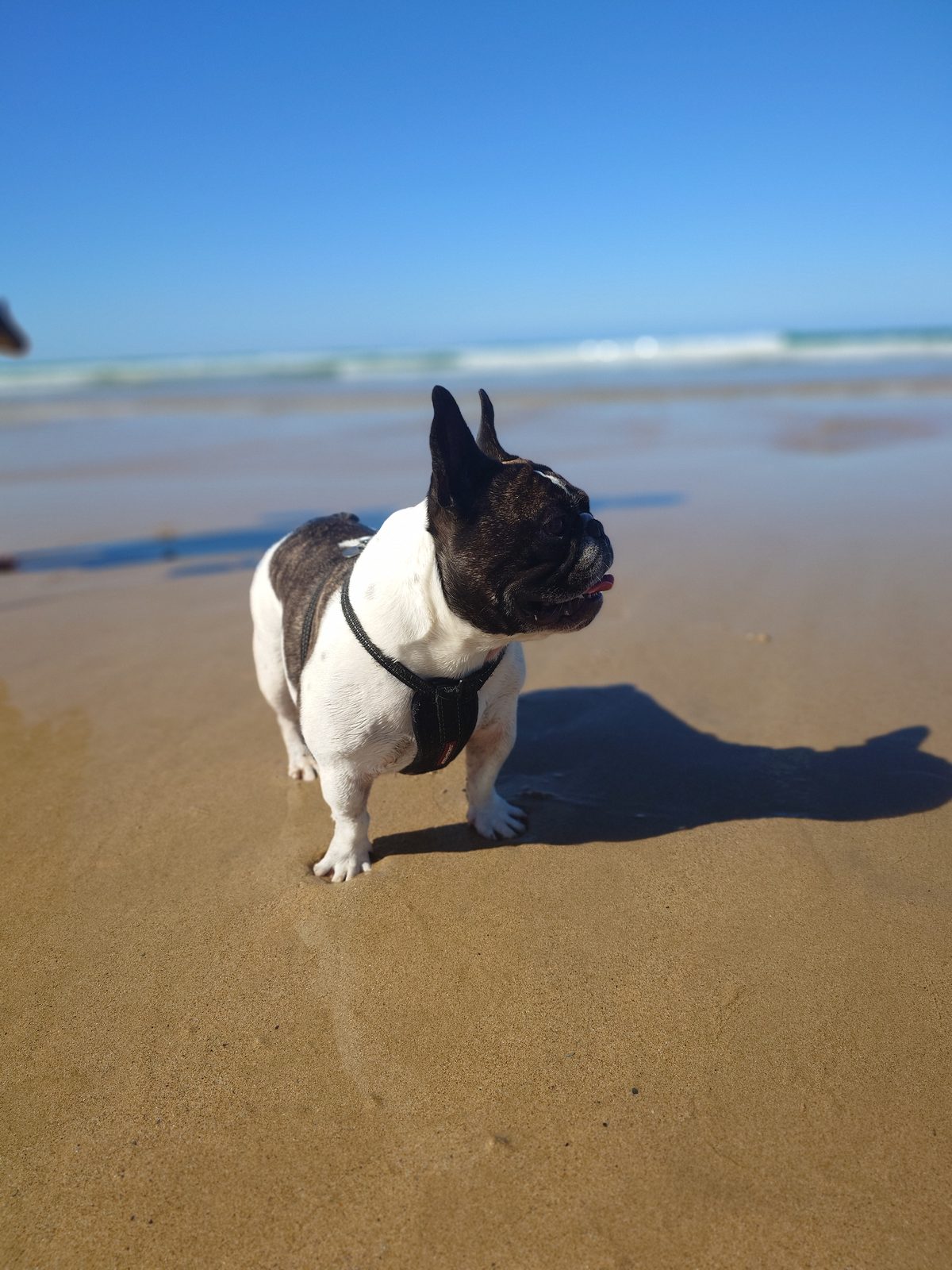 Buster’s face says “I didn’t sign up for this” and he’s absolutely right
So Can ANY French Bulldog Enjoy Water?
Here’s the thing: some Frenchies do like water. Not swimming, necessarily, but splashing, paddling, standing in the shallows looking confused.
Jago’s relationship with water: Enthusiastic chaos. Will charge into the sea up to his ankles, then stand there barking at waves like they’ve personally offended him. Thinks paddling pools are enormous water bowls. Has no concept of danger or consequences.
Buster’s relationship with water: Disdainful tolerance. Will wade into the shallows if it’s very hot and he’s very judgemental about the lack of air conditioning. Prefers to observe water from a safe distance, ideally from a towel, ideally with someone bringing him snacks.
First time at a Cornwall beach, Jago charged directly into the shallows and tried to drink the sea. Just… lapping up seawater like it was a large, salty water bowl put there specifically for him. We stopped him before he could make himself properly ill, but he was deeply offended that we were denying him what he clearly thought was a beach amenity.
Buster stood at the water’s edge, looked at the Atlantic Ocean, looked at us, looked back at the ocean, and radiated pure disappointment. “You’ve brought me here,” his expression said, “to this cold, loud, wet place, when I could be at home on the sofa.” He was absolutely right, and we learned our lesson.
Our favourite beach now is Watergate Bay — wide, beautiful, and we only take them in autumn/winter when it’s properly cold and overheating isn’t a risk. They paddlepaddling in the shallows (Jago with enthusiasm, Buster with reluctant dignity), but actual swimming? Never tried it, never will.
The key is: they can enjoy water with proper safety measures. Which brings us to…
Water Safety Essentials for French Bulldogs
If you want your Frenchie to experience water safely (and honestly, why wouldn’t you—it’s hilarious), here’s what you absolutely need:
1. A Properly Fitted Life Jacket (Non-Negotiable)
Not optional. Not “we’ll see how they do first.” Not “they’re only going in the shallow end.”
A life jacket. Every time. No exceptions.
Look for:
- Chin float support (keeps their heavy head above water)
- High buoyancy (because they sink like furry anvils)
- Grab handle on top (for quick rescue if needed)
- Bright colours (so you can spot them immediately)
- Adjustable straps (Frenchies are barrel-shaped; one size does not fit all)
We use the Outward Hound PupSaver Life Jacket and it’s genuinely excellent for brachycephalic breeds.
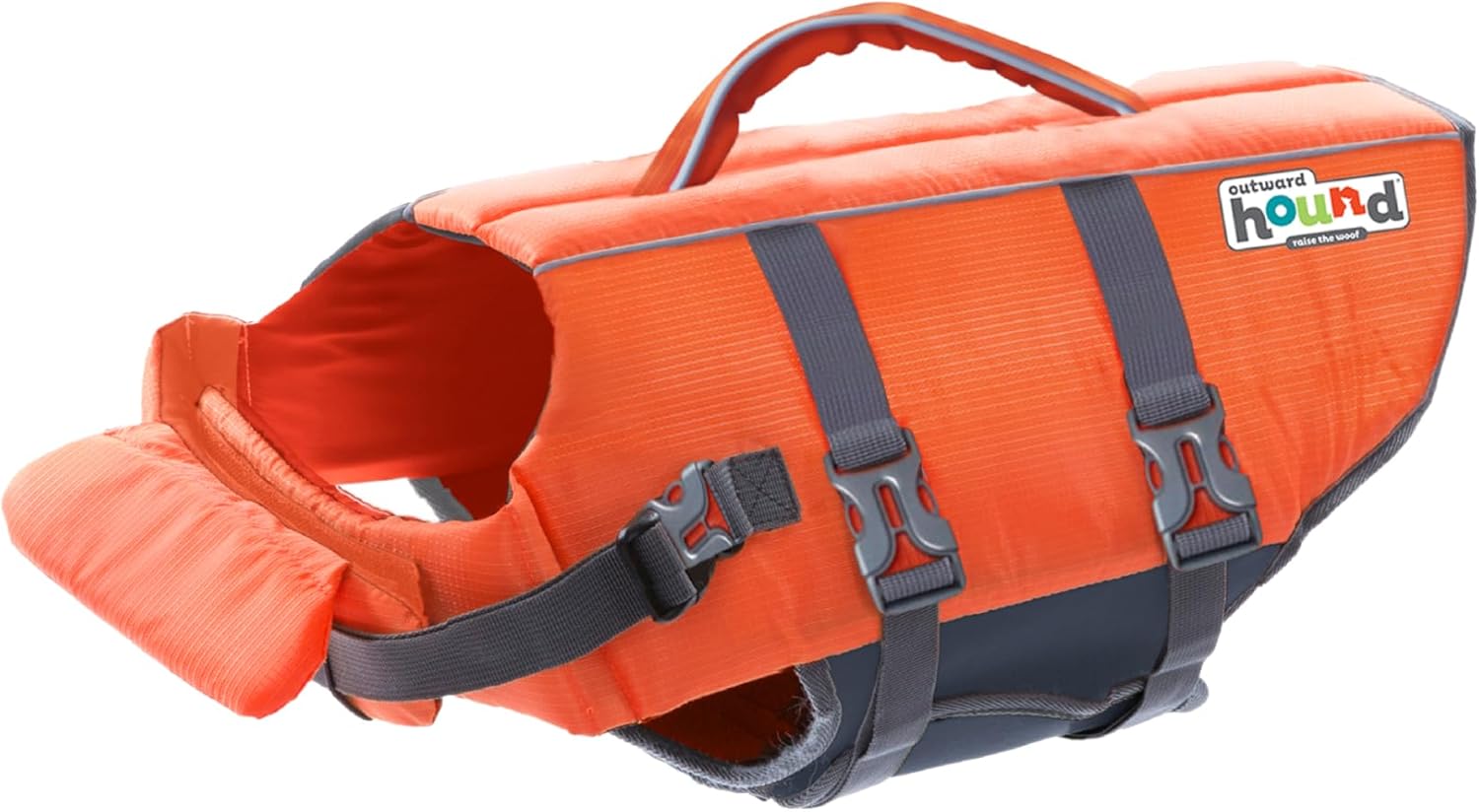
Outward Hound PupSaver Ripstop Life Jacket
Why it’s brilliant for Frenchies:
- Front chin float keeps their head elevated (crucial for brachycephalic breeds)
- High flotation panels positioned for top-heavy dogs
- Ripstop material survives Jago’s “helpful” attempts to eat it
- Multiple grab handles for quick extraction
- Reflective strips for visibility
- Adjustable straps accommodate the Frenchie barrel shape
The not-so-brilliant bits:
- Sizing can be confusing (measure carefully)
- Jago thinks it’s a conspiracy and requires bribes to cooperate
- Won’t make your Frenchie a good swimmer (nothing will), just a safe swimmer
How to size it: Measure your Frenchie’s chest at the widest point (usually right behind the front legs) and their back length. Most Frenchies are Small or Medium. Buster is a Medium. Jago is a Small, which he finds personally offensive.
We may earn a commission from purchases (at no extra cost to you)
Both boys own life jackets — proper ones with chin floats and grab handles. We discovered we needed them when we took a narrow boat holiday through the canals. The boat had low sides, two curious Frenchies, and our anxiety levels hovering somewhere around “catastrophic.”
Convincing Buster to wear his life jacket required careful negotiation. He looked at it. He looked at me. He looked at it again. His expression clearly asked: “Is this really necessary? Have I not maintained my dignity through numerous indignities already?”
Yes, Buster. Yes, it’s necessary. Your bodyweight-to-buoyancy ratio is alarming and you sink like a stone. The life jacket is non-negotiable.
He wore it. He was not pleased. But he wore it, and we all survived the narrow boat holiday without anyone going overboard (though Jago tested the boundaries several times, naturally).
2. Constant Supervision (Yes, Really)
“But they’re just in the paddling pool in the garden!”
“It’s only ankle-deep!”
“I’m right here!”
Doesn’t matter. Watch them. Constantly.
Frenchies can tire quickly, panic easily, and don’t have the instinct or ability to self-rescue. You need to be within arm’s reach, paying attention, ready to grab them if needed.
This is not the time to:
- Check your phone
- Have a conversation that requires actual focus
- Assume they’ll be fine for “just a minute”
- Pop inside to grab something
(I speak from experience. Never again.)
3. Limit Time in the Water
Even with a life jacket, swimming is exhausting for Frenchies. Their little legs are working overtime, they’re fighting their own anatomy, and they’re probably getting overstimulated by the sheer novelty.
Good practice:
- 5-10 minutes maximum in the water
- Frequent breaks on dry land
- Watch for fatigue—excessive panting, slowing down, looking confused
- Have a towel ready—getting cold after is a real risk
Jago would stay in water for hours if we let him (he has no self-preservation instinct). Buster tolerates approximately 90 seconds before employing the Full Judgemental Stare.
4. Introduce Water Gradually (Not the Jago Method)
The correct way to introduce a Frenchie to water:
- Start with a paddling pool or shallow stream
- Let them investigate on their own terms
- Use treats and encouragement (not force)
- Build positive associations slowly
- Always use a life jacket, even in 2 inches of water
The Jago method:
- See water
- Charge directly at water with no plan
- Immediately regret
- Bark at the water accusingly
- Do it again tomorrow
Be like Buster. Approach with dignity and caution.
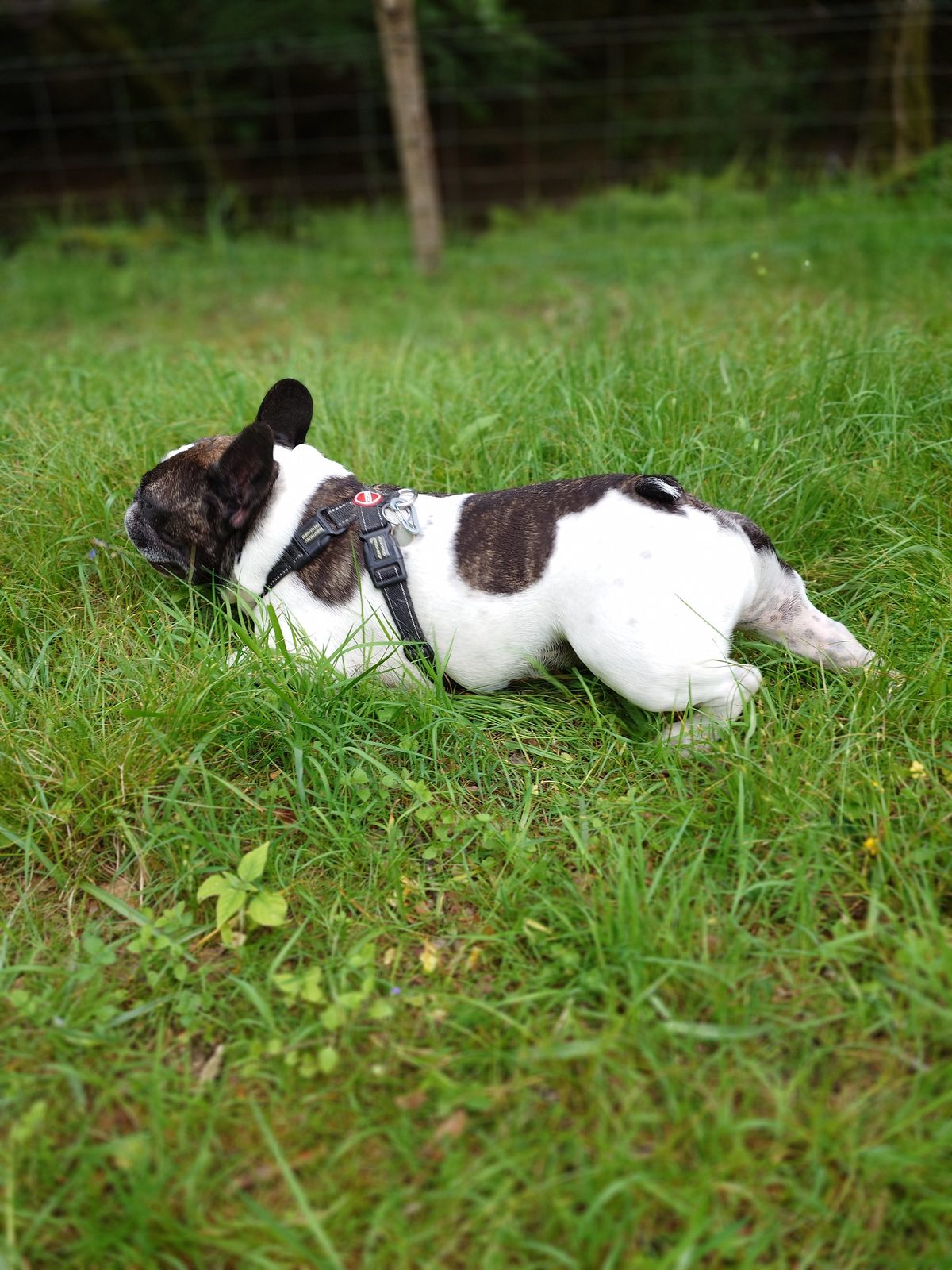 Rare footage of Buster engaging in water-based activities, circa 2025 (colorised)
Water Safety in Cornwall (And Other Beachy Places)
We live in Cornwall, which means beaches everywhere. Gorgeous, scenic, full of tempting water that Jago wants to fight and Buster wants to ignore.
Here’s what we’ve learned about Frenchies and beach safety:
The Sea Is Not a Paddling Pool
Even in a life jacket, the sea is risky for Frenchies:
- Waves can knock them over (they have a low centre of gravity but waves don’t care)
- Currents can pull them off their feet instantly
- Cold water is exhausting and can cause hypothermia quickly
- Salt water ingestion leads to upset tummies (and worse)
We let the boys paddle in the shallows when it’s very calm, but they’re never in deeper than ankle-height water, they’re always in life jackets, and we’re always within grabbing distance.
Rock Pools Are Safer (But Still Need Supervision)
Rock pools are brilliant for Frenchies:
- Shallow, controlled depth
- No waves or currents
- Fascinating smells (apparently)
- Safe for a paddle and a sniff
Buster approves of rock pools. They’re dignified. They don’t move unexpectedly. You can stand in them whilst judging seagulls.
Rivers and Streams: Approach With Caution
Looks calm, might have currents. Looks shallow, might have sudden drop-offs. Looks fine, might have shopping trolleys or other submerged hazards.
If you’re near moving water:
- Life jacket (always)
- Test the depth yourself first
- Stay in very shallow sections only
- Never assume it’s safe because it looks calm
There’s a stream on Bodmin Moor that looks uniformly shallow — crystal clear water, maybe two inches deep, perfectly safe. Except it’s not uniformly anything. Jago found the one spot, exactly six inches to the left of where we were standing, where it dropped to Jago-height (which is not a great height for water confidence).
He went from paddling happily to suddenly in over his head, little legs churning away, the life jacket doing exactly what it was supposed to do (thank god), and us grabbing him immediately. He was fine — the life jacket kept his head up, we got him out in seconds — but it was a very clear reminder that “looks safe” and “is safe” are not the same thing with water and Frenchies.
Every stream gets tested with a stick first now. Every pond, every puddle that looks suspicious, every body of water gets the stick test. We’re not going through that again.
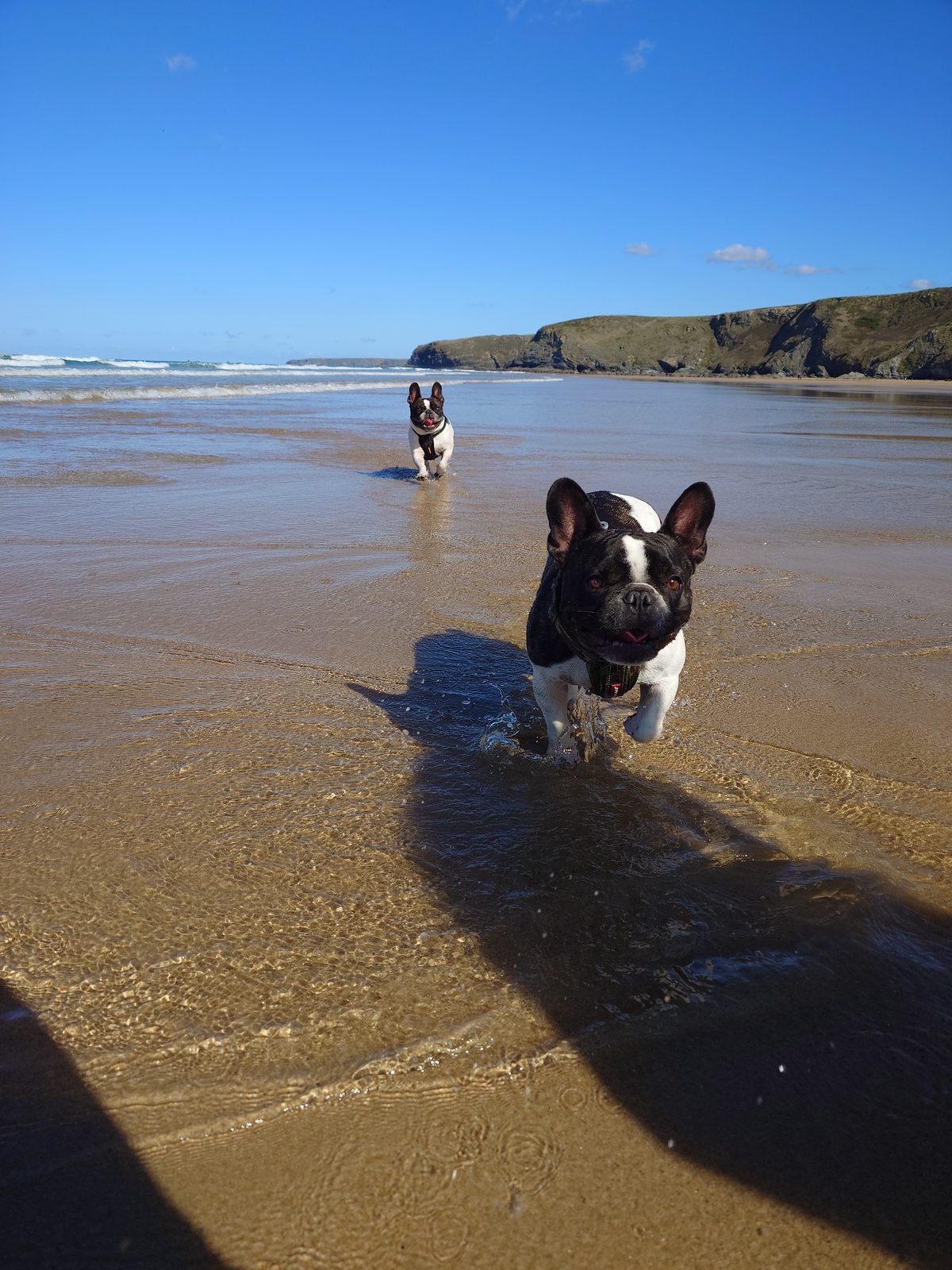 Jago, mid-bark, explaining to the Atlantic Ocean that it’s being unreasonable
Alternatives to Swimming (For the Sensible Among Us)
If you want to help your Frenchie cool down without the risks of actual swimming:
1. Paddling Pools (The Superior Option)
Shallow, controlled, no currents, easy to supervise. Fill it with a few inches of water and let them splash about.
Jago’s review: “CAN I DRINK IT? I’M GOING TO DRINK IT. Why is this water different from kitchen water? IS THERE A FISH IN HERE?!”
Buster’s review: “Tolerably refreshing. Prefer a proper bath. 5/10.”
2. Sprinklers and Garden Hose
Some Frenchies love chasing water from a sprinkler. Some find it deeply offensive.
Jago: Offense. Much barking. Water is clearly attacking and must be defeated.
Buster: Avoids. Watches from a safe distance. Questions our life choices.
3. Damp Towels and Cooling Vests
If cooling down is the goal, a wet towel or proper cooling vest is safer and more effective than swimming.
4. Indoor Paddling (Bath Time!)
Controlled environment, warm water, you can actually wash them whilst they glare at you resentfully.
Not technically swimming, but it’s water-based enrichment. Sort of.
Signs of Water Distress (Know Before You Go)
Even with all precautions, know what distress looks like:
Immediate danger signs:
- Head going under repeatedly
- Frantic, uncoordinated paddling
- Eyes wide, panicked expression
- No forward movement despite effort
- Silence (no snorting, grunting, or usual Frenchie noises)
Get them out NOW if you see:
- Excessive coughing or gagging
- Blue-tinged gums or tongue
- Lethargy after leaving the water
- Vomiting or diarrhoea
- Shivering or seeming cold
- Disorientation or confusion
After-water care:
- Dry them thoroughly (especially ears and face folds)
- Keep them warm
- Offer fresh water to drink
- Monitor for several hours
- Contact your vet if anything seems off
We bought a doggy paddling pool last summer. One of those rigid plastic ones designed for exactly this purpose — small dogs, hot days, supervised water fun. £35. Great reviews. Perfect solution, we thought.
They hated it.
Buster refused to go near it. Looked at it like it was a personal insult. Jago investigated it with his usual thoroughness, tried to drink from it (seeing a pattern?), accidentally inhaled some water, coughed dramatically, looked betrayed, and refused to go near it again.
We still have the pool. It’s storing plant pots now. £35 of optimism, rejected completely.
The vet’s response when I anxiously called about Jago’s pool water incident was reassuring but blunt: “These dogs are not designed for aquatics. They’re designed for sofas and looking concerned. Keep them away from water that’s deeper than their ankles and everyone will be happier.”
Wisest advice we’ve ever received.
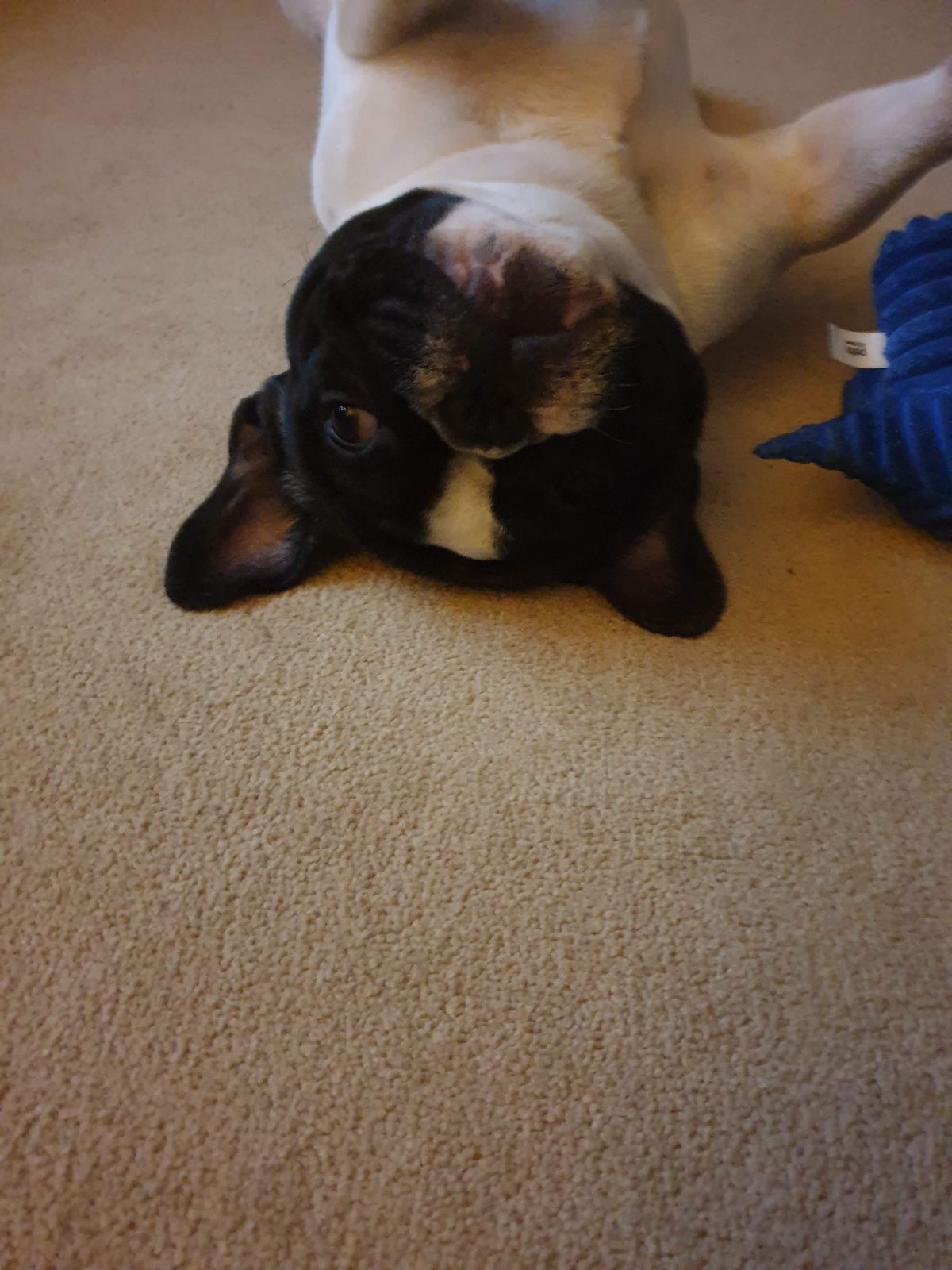 Post-water Buster demands immediate warming and prolonged sympathy
Pool Safety at Home
If you have a pool and a Frenchie, you need multiple layers of safety:
- Fencing around the pool (not optional)
- Pool cover when not in use
- Never unsupervised access—ever
- Exit strategy—if they fall in, can they get out? (Spoiler: no, they can’t)
- Life jacket on if they’re anywhere near the pool
- Consider a ramp or pet-safe steps (though they still can’t really use them effectively)
More Frenchies drown in home pools than anywhere else. They’re curious, clumsy, top-heavy, and overconfident.
Jago would absolutely investigate a pool, fall in whilst investigating, and be genuinely shocked by this turn of events.
Buster would judge the pool from afar and never go near it because he’s sensible.
Both scenarios require the same safety measures.
FAQ: French Bulldogs and Swimming
Can French Bulldogs learn to swim?
They can learn to paddle in a controlled environment with a life jacket, but they’ll never be good swimmers. Their anatomy works against them. Think of it as “assisted floating with frantic leg movement” rather than actual swimming.
Do I really need a life jacket for shallow water?
Yes. Frenchies can panic and struggle in 6 inches of water. The life jacket keeps their head up and gives them confidence. It’s not about depth; it’s about safety and their complete lack of natural buoyancy.
My Frenchie loves water. Doesn’t that mean they can swim?
Loving water and being able to swim are completely different things. Jago loves water. Jago cannot swim. These facts coexist in perfect, chaotic harmony. Enthusiasm does not equal ability, especially for Frenchies.
What’s the best age to introduce a French Bulldog to water?
Puppies can be introduced to very shallow water (1-2 inches) from a few months old, always supervised and with positive reinforcement. Don’t force it. Some Frenchies will always hate water, and that’s fine. Buster’s position is that water is acceptable for drinking and baths under protest, and we respect that.
Can French Bulldogs swim in the ocean?
Technically they can paddle in very shallow, calm ocean water whilst wearing a life jacket and being supervised constantly. Practically, the ocean is unpredictable and risky. We let ours paddle in the shallows on very calm days at Cornwall beaches, but we’re talking ankle-deep water, no waves, life jackets on, hands ready to grab them.
Would I let them actually swim in the sea? Absolutely not.
How do I know if my Frenchie is too tired in the water?
Watch for: slowing paddle pace, less coordinated movements, excessive panting (more than normal Frenchie panting, which is already excessive), looking around frantically for you, or attempting to climb on you. If in doubt, get them out. Better to end water time early than risk exhaustion.
The Bottom Line: Frenchies and Water
Can French Bulldogs swim?
In the most technical sense, briefly, inefficiently, and with considerable panic—yes.
Should they?
Only with a life jacket, constant supervision, shallow water, and the understanding that they’re paddling with anxiety rather than swimming with confidence.
Is it worth it?
If your Frenchie enjoys it (in small, safe doses), yes. Jago finds water hilarious. Buster tolerates it when it’s hot. Both benefit from safe, supervised paddling.
Just remember: these dogs are designed for sofas, not seas. Respect their limitations, use proper safety gear, and never assume they can handle water just because they’re enthusiastic.
And for the love of everything, get a life jacket.
We may earn a commission from purchases (at no extra cost to you)
Related Reading:
- Best Cooling Vest for French Bulldogs
- Recognising Overheating in Frenchies
- Cornwall Beaches Safe for Dogs
- French Bulldog Summer Safety Guide
Disclosure: This post contains affiliate links. If you buy through our links, we may earn a small commission at no extra cost to you. This helps fund Buster’s dignified retirement and Jago’s ongoing campaign to investigate everything. We only recommend products we actually use—I wouldn’t put a life jacket on Buster unless it genuinely worked. He’d never forgive me.